
Ophthalmoscope for Sale: A Clinical Buying Guide for 2026
10/14/2026 05:13:01
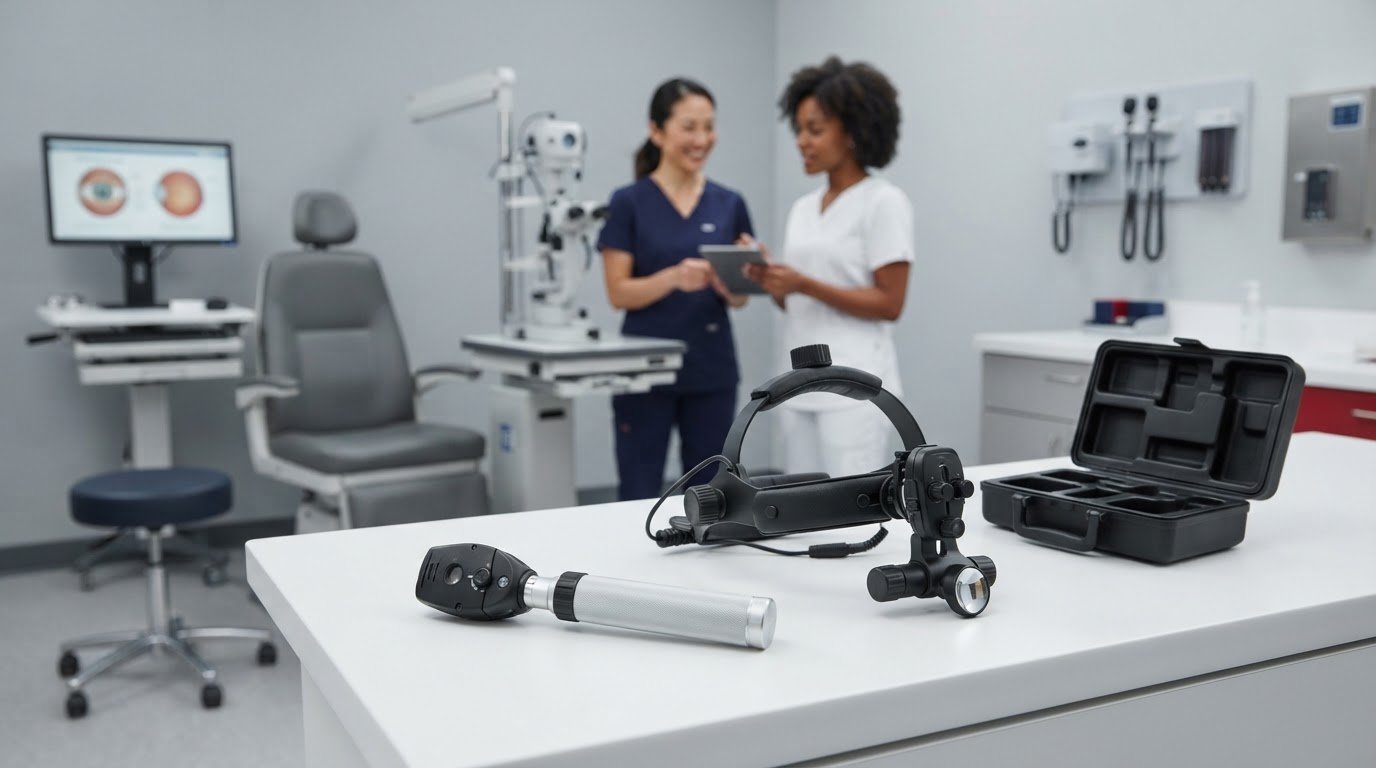
The most capable ophthalmoscope isn’t automatically the right fit for your clinic. When looking for an ophthalmoscope for sale, start with the examinations you perform and where the instrument will be used. Then compare the features that support that workflow. A portable handheld model and a head-mounted instrument serve different clinical needs.
Listings can use different terms and emphasize different specifications, so it helps to know which details affect everyday use. Consider which features match your examinations and whether the instrument fits your existing setup. The right choice depends on practical requirements, not a feature list alone.
This guide compares direct and indirect ophthalmoscopes and outlines clinical and operational criteria to consider before buying. You’ll learn how to read product details, assess portability and viewing needs, and narrow your options. USA Medical and Surgical Supplies offers ophthalmoscopes through its online medical and diagnostic equipment catalog, where you can browse listings and compare their stated specifications.
Key Takeaways
- Start with the examinations, users, and setting the instrument needs to support before comparing models.
- Understand how direct and indirect ophthalmoscopes differ in format and typical workflow fit.
- Compare listing details such as light source, viewing adjustments, and power format with your practical needs.
- Use a buying checklist to review specifications and confirm the instrument fits your established clinical workflow.
- When browsing an ophthalmoscope for sale, compare each listing with the criteria that matter to your practice.
Ophthalmoscope for Sale: Start With the Exam Setting and Intended Use
Before comparing an ophthalmoscope for sale, define the examinations it needs to support, who will use it, and where it will be stored. These practical details help narrow your options. A device chosen for one clinician’s routine may not suit a shared exam room or a team that moves between rooms.
An ophthalmoscope is an instrument used to view structures inside the eye during an examination. The examination technique is called ophthalmoscopy. As the Ophthalmoscopy overview explains, the term covers methods for examining the eye’s interior. Choosing equipment is a purchasing decision, not a clinical diagnosis. Clinicians should continue to follow their established examination protocols and use their training to interpret findings.
Consider the setting as well as the task. In primary care and outpatient examinations, an ophthalmoscope may be part of a broader clinical workflow. Other clinical settings may have different routines, users, and storage arrangements. Rather than choosing by setting label alone, identify what the users need to do and how the instrument will fit into their established process.
Which clinical settings commonly use an ophthalmoscope?
Primary care practices and outpatient clinics may include eye examinations in routine appointments. Ophthalmoscopes can also be used in other clinical environments where eye examination is part of the established workflow. For shared equipment, consider how it will move between users or rooms, where it will be kept, and how staff will return it after use. These details can influence handling and storage preferences without changing clinical protocols.
For a shared instrument, account for the range of intended users and how equipment is organized in the space. For an instrument assigned to one practitioner, personal workflow and storage may carry more weight. In either case, focus on the actual setting rather than assuming one format suits every practice.
What should buyers decide before comparing devices?
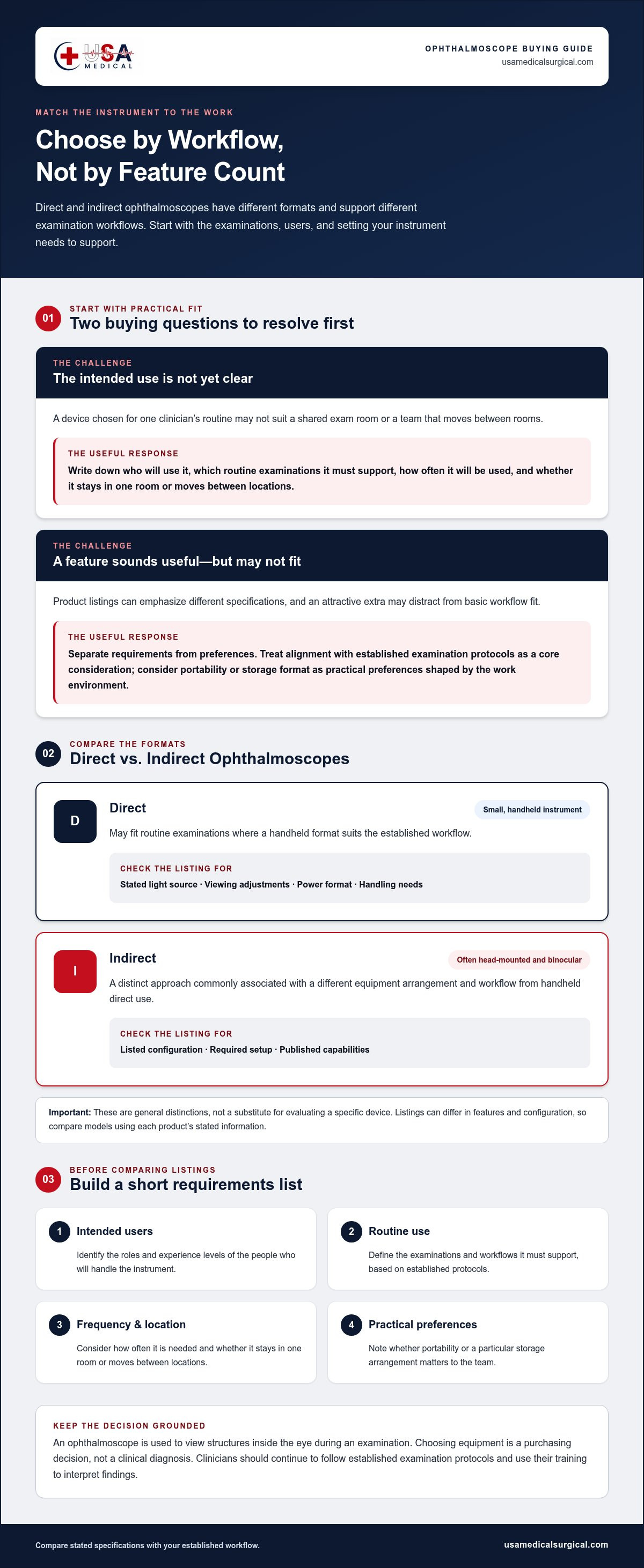
Write down who will use the instrument, which routine examinations it needs to support, and how often it will be used. Separate requirements from preferences. Alignment with established examination protocols is a core consideration, while portability or a particular storage format may be a preference shaped by the work environment. This distinction helps prevent attractive extras from distracting from basic workflow fit.
- Intended users: Identify the roles and experience levels of the people who will handle the instrument.
- Routine use: Define the examinations and workflows it must support, based on your established protocols.
- Use frequency and location: Consider how often the instrument is needed and whether it stays in one room or moves between locations.
- Practical preferences: Note whether portability or a specific storage arrangement matters to your team.
Keep this requirements list nearby when comparing device types and product details. A clear picture of intended use makes it easier to distinguish a genuine fit from a feature that simply sounds useful.
Ophthalmoscope Types: Understand the Options Before You Buy
Once you know the setting and users, compare the broad instrument types. Direct and indirect ophthalmoscopes have different formats and support different examination workflows, so neither is the universal choice. The MedlinePlus Medical Encyclopedia outlines ophthalmoscopy methods, including direct and indirect approaches. For purchasing, focus on the instrument format and the published specifications that relate to your established examination methods.
This comparison is intended to help you read product listings. A detailed comparison of direct and indirect examination techniques can go further, but for a purchase decision, first consider what each format means for your work and what the individual listing states.
| Type | General format | Typical workflow fit | Buyer considerations |
|---|---|---|---|
| Direct | Small, handheld instrument | Routine examinations where a handheld format fits the established workflow | Compare stated light source, viewing adjustments, power format, and handling needs |
| Indirect | Often a head-mounted, binocular instrument | Workflows using an indirect examination approach | Review the listed configuration, required setup, and published capabilities |
These are general distinctions, not a substitute for evaluating a specific device. Listings can differ in features and configuration, so base model-level comparisons on each product’s stated information.
Direct ophthalmoscopes and handheld workflows
A direct ophthalmoscope is generally a compact handheld instrument. Its format may suit a workflow where the practitioner handles the device directly and stores it for repeated use. Consider who will use it and whether the format aligns with their established routine. Compare each listing’s stated light source, viewing adjustments, and power format rather than assuming every handheld device has the same features.
Indirect ophthalmoscopes and broader equipment setups
Indirect ophthalmoscopy is a distinct approach commonly associated with head-mounted binocular instruments. It may involve a different equipment arrangement and workflow from handheld direct use. Consider the examination methods already in place, who will operate the instrument, and how its setup fits the clinical space. Base comparisons of field of view and other capabilities on the individual product’s published specifications.
Use the table as a first filter, then review the details for each candidate. Compare a stated light source, adjustment, or power arrangement with the requirements of your existing workflow. Don’t infer a feature from the device type alone. A handheld format, for example, does not establish every other capability of the instrument.
As you browse an ophthalmoscope for sale, ask whether the stated format and configuration align with how the instrument will be used. Apply that filter while browsing the ophthalmoscope catalog, then compare the strongest candidates’ listed specifications.
How to Compare Ophthalmoscope Features Without Overbuying
After narrowing the instrument type, compare the details that affect use in your clinic. A longer feature list doesn’t automatically mean a better fit. Compare specifications with actual examination needs, not feature count. The New England College of Optometry’s overview of ophthalmoscopy describes different examination approaches, underscoring why equipment choices should align with the methods your clinicians already use.
Use a comparison table to keep the review focused. Record only information stated in each product listing. Don’t assume a feature or accessory is included because it appears on another device.
| Listing detail | What to compare | Workflow relevance |
|---|---|---|
| Light source | The illumination information explicitly provided | Compare against the requirements of your established examination process |
| Viewing adjustments | Adjustments described in the listing | Assess whether they match the users’ familiar handling preferences |
| Power format | The stated power arrangement | Consider how it fits use and storage in your clinical space |
| Compatibility or accessories | Only details the listing specifically names | Determine whether the stated configuration fits your existing setup |
Which specifications deserve a close look?
Start with the light source, viewing adjustments, and power format. Listings may describe these differently, so compare the wording rather than relying on a model category or product image. Note compatibility details or included accessories only when the listing explicitly identifies them. If a specification isn’t described, don’t treat it as included or assume it matches another model.
How portability and shared use affect selection
Think about where the instrument will be used. A device that stays in one examination room may have different storage priorities from one that moves between spaces or is shared by staff. Consider where it will be kept, how users access it, and whether its listed format fits that routine. Portability can be useful for some workflows, but it isn’t essential for every buyer.
For a practical comparison, review every listing against the same questions:
- Is the stated light source clear? Record the listing’s description without inferring performance.
- Are viewing adjustments described? Compare only the adjustments named for each instrument.
- Does the power format fit your workflow? Consider the planned location and storage routine.
- Are accessories or compatibility details specified? Count them only when the listing states them.
This approach separates requirements from preferences. If an instrument will remain in one room, portability may matter less than a stated configuration that fits the existing setup. If several staff members will use it, access and consistent storage may deserve more attention. Let actual workflow priorities guide the decision.
When comparing an ophthalmoscope for sale, use the product listing as the source for model-specific information. Browse ophthalmoscope listings and apply the same criteria to each option before moving on to the ordering checklist.
Ophthalmoscope Buying Checklist: Confirm Fit Before Ordering
A final review can help catch a mismatch before you place an order. Work through the checklist in sequence: define the need, compare the product listing, then review the purchasing information shown online. The goal is to confirm that the instrument’s stated details fit your established clinical workflow, not to choose by appearance or feature count alone.
A practical pre-purchase checklist for clinical buyers
- Record the intended use. Note the examination setting, who will use the instrument, the routine examination needs, and the ophthalmoscope type under consideration. Include whether the device will be shared or assigned to a particular user.
- Match requirements to listing details. Compare the product’s stated specifications with your requirements. Review the described light source, viewing adjustments, power format, and other details relevant to your workflow. Include accessories and compatibility information in the comparison only when the listing explicitly describes them.
- Resolve gaps in your comparison. If a detail matters to your established process but isn’t clear in the product information, don’t assume it is included or equivalent to another option. Use the stated information to decide whether the instrument meets your defined requirements.
- Review the online purchasing information. Before checkout, review the applicable order, shipping, and returns information displayed on the website. Consider how the item and listed configuration fit your purchasing process, especially if the order is part of a broader clinic purchase.
- Make the fit decision. Confirm that the listed specifications align with the intended users and established examination workflow. If the details match the requirements you recorded, you have a clear basis for ordering.
This process keeps the decision grounded in product information rather than assumptions. If your clinic’s routine depends on a particular power format, check the listing for that detail directly. If several staff members will share the device, include the clinic’s storage and access routine in your decision.
When equipping a wider diagnostic workflow
An ophthalmoscope purchase may sit alongside other diagnostic equipment decisions, but each item needs its own workflow review. Keep this checklist focused on the eye examination instrument and its stated specifications. If you’re planning a broader diagnostic equipment purchase, the existing ECG machine buying guide can support that separate equipment-planning process. It does not replace the ophthalmoscope-specific checks above.
Use these steps while reviewing an ophthalmoscope for sale online. Browse ophthalmoscopes and compare listings with your requirements, then review the applicable purchasing information before checkout.
Find an Ophthalmoscope for Sale Through USA Medical and Surgical Supplies
USA Medical and Surgical Supplies offers ophthalmoscopes through its online medical equipment catalog. Use the criteria in this guide to compare individual listings with your clinic’s requirements. Start with the examination workflow and intended users, then review the specifications and product details presented for each option. This keeps the choice tied to the work the instrument needs to support.
Browse ophthalmoscopes with your requirements in mind
Before browsing, keep your requirements nearby: intended use, who will handle the instrument, and the product details that matter to your established process. Compare listing information consistently across options. Base your assessment on the specifications and included items described on the website rather than assuming every ophthalmoscope comes with the same features, accessories, or configuration.
A focused review can help you move from a broad category to a shortlist without relying on assumptions. For each candidate, consider whether its stated details align with the instrument type and workflow you identified. If a listed feature isn’t relevant to your routine, it may not need to affect your decision. Prioritize the details that matter for the examinations and users the device must support.
- Compare the stated specifications: Check the product information against your established examination methods and operating requirements.
- Review included items: Use the listing’s description to understand what is presented with the instrument.
- Check purchasing information: Review the website’s applicable order, shipping, and returns information before checkout.
Online ordering lets you purchase through the catalog. Before placing an order, read the product listing and relevant website information together. The listing helps you assess the instrument’s described details, while the purchasing information explains the online order process. Review both so the product selection and purchase steps fit your clinic’s needs.
Take the next step toward a suitable purchase
Choose an option only after its stated specifications and product details align with your intended use, users, and established workflow. Then review the applicable order, shipping, and returns information before checkout. This final check keeps the decision grounded in the information presented online.
To find an ophthalmoscope for sale, compare the available listing details with your requirements and select an option that fits your clinical workflow. Browse the online ophthalmoscope catalog.
Make Your Next Equipment Decision With Confidence
A clear set of requirements can guide more than this purchase. Keep it as a reference for future equipment reviews, so your team can compare options against a consistent clinical workflow rather than starting from scratch. It also gives staff a practical way to discuss priorities before an order is placed.
When evaluating an ophthalmoscope for sale, focus on whether the listed details support the work your clinicians need to perform. A suitable choice fits your established process and the people who will use it, not simply the option with the longest feature list. Make that fit assessment before checkout.
USA Medical and Surgical Supplies provides an online catalog of medical and diagnostic equipment. Use your requirements to guide your review of the available information. Browse ophthalmoscopes and diagnostic equipment.
Frequently Asked Questions
What does the diopter wheel on an ophthalmoscope do?
The diopter wheel changes the instrument’s focusing lens so the user can bring the viewed structures into focus. The appropriate setting depends on the user’s vision and the view being examined. If the image appears blurred, adjust the wheel gradually while looking through the viewing aperture. The wheel isn’t a substitute for corrective eyewear or a clinical assessment, and available settings vary by instrument.
Can an ophthalmoscope be used while wearing glasses?
Yes, many clinicians use an ophthalmoscope while wearing glasses, though comfort and viewing position depend on the instrument’s design and the wearer’s prescription. Keep glasses on if removing them makes focusing difficult, and position the viewing aperture comfortably without pressing the frames against the instrument. The diopter setting may need adjustment for the view. If several clinicians share a device, each user may need to refocus it.
Is an ophthalmoscope the same as a retinoscope?
No. An ophthalmoscope is used to view structures inside the eye, while a retinoscope helps an examiner assess refractive error by observing how light reflects from the retina. They serve different examination purposes, even though both direct light toward the eye. The instruments aren’t interchangeable. For procurement, match the device category to the examination task rather than assuming one can perform the other instrument’s function.
Can an ophthalmoscope show the entire retina?
Not necessarily. The area visible at one time depends on the ophthalmoscope type, its stated capabilities, and the examination technique. A direct instrument generally provides a more limited view at a time, while indirect approaches can provide a broader view. Don’t assume the instrument shows the “entire retina” based on its category name alone. Clinicians should use their established examination methods and the specific instrument’s information to understand its intended use.
Does an ophthalmoscope require pupil dilation?
No, pupil dilation isn’t required for every ophthalmoscopic examination. Whether dilation is appropriate depends on the examination purpose and the clinician’s judgment. Dilation can affect what the examiner is able to view, but it involves clinical considerations beyond equipment selection. Patients shouldn’t use dilating drops on their own for an examination. Follow the instructions of the clinician performing the assessment, including any preparation guidance provided.
How should an ophthalmoscope be cleaned between uses?
Follow the cleaning instructions supplied for the specific instrument and the infection-control procedures established by your facility. Pay attention to which external surfaces or patient-contact components the instructions address, and use only cleaning products and methods permitted by the manufacturer. Don’t immerse the instrument or apply a chemical based on guesswork. If the device is shared, make cleaning part of the clinic’s defined handoff routine.
Can one ophthalmoscope be shared by multiple clinicians?
Yes, a clinic may share an ophthalmoscope if shared use fits its workflow and the instrument is handled according to its instructions and facility procedures. Clinicians may need to adjust the diopter setting to suit their vision, then return the device to the clinic’s agreed storage location. Before choosing an ophthalmoscope for shared use, consider who will access it and how it will be cleaned and stored between examinations. Browse ophthalmoscopes in the online catalog.