
ECG Machine Buying Guide: Choose the Right Device
10/02/2026 05:09:25
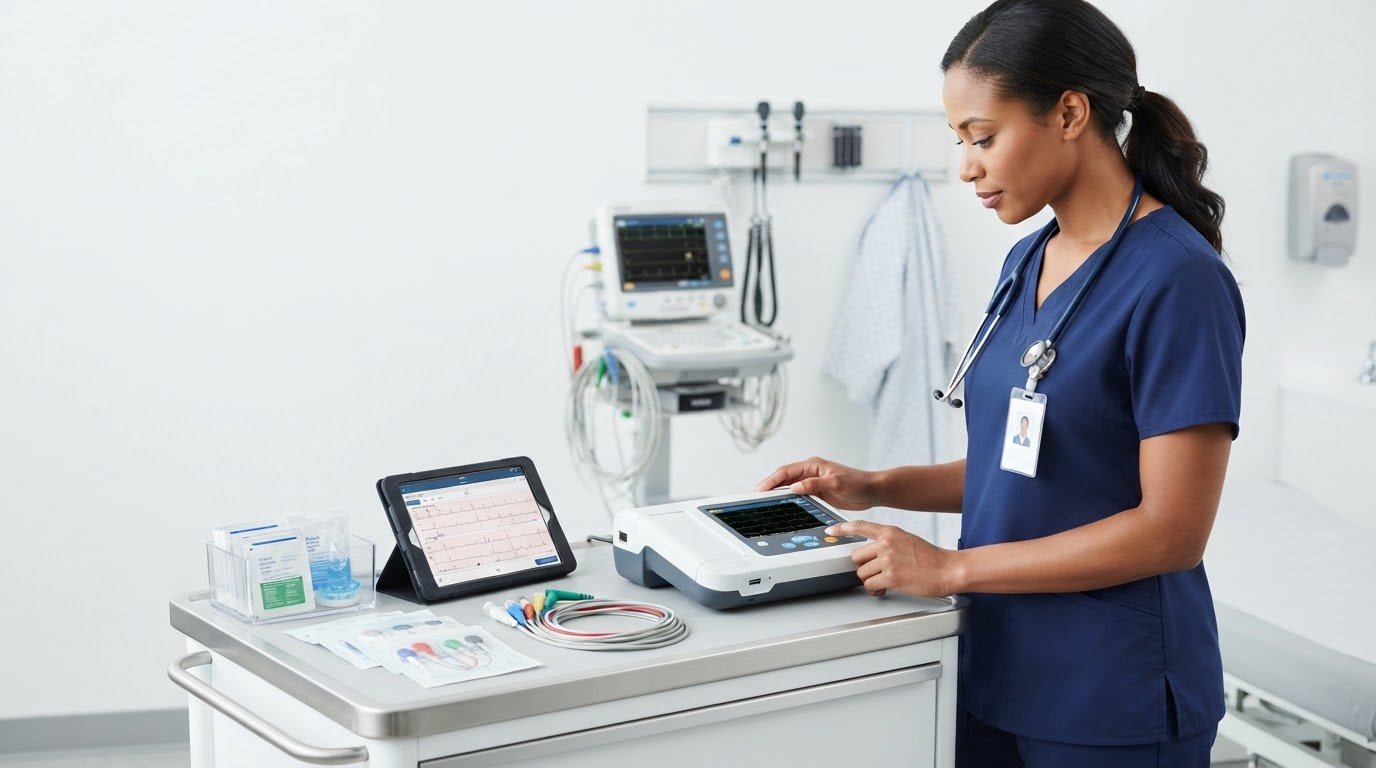
The most feature-rich ecg machine on a product page may still be the wrong fit for your practice. A long specification list won’t tell you whether the device suits the room where recordings happen, how staff will manage the equipment, or how the results fit into your documentation workflow. Start with the intended use and day-to-day process, then compare the features that support them.
Portability, channel configuration, and data-handling options are useful comparison points, but only when tied to specific needs. For example, a device that moves between rooms may need a different footprint and power setup than one used in a dedicated space. If staff need to transfer reports, confirm the supported methods and formats rather than relying on a general connectivity label.
This guide explains how to compare ECG machine types and workflow features. You’ll learn what to consider when weighing portable and stationary devices, channel configurations, data storage and transfer, and compatibility with ECG electrodes and other supplies. We’ll also cover what to verify before ordering, including included accessories, documentation, and listing specifications. The goal is to find a device that fits your setting and purchasing requirements, not simply one with the longest feature list.
Key Takeaways
- Match an ecg machine to its intended clinical setting and the way your team records, reviews, and documents readings.
- Compare channel configuration, portability, controls, and output options against everyday workflow needs.
- Use a consistent checklist to compare device types and avoid paying attention to features your team may not use.
- Before ordering, confirm the exact specifications, included components, electrode compatibility, and required documentation.
- Browse ECG machines and electrodes through an online medical equipment retailer, then check each listing against your purchasing requirements.
What Is an ECG Machine and Its Clinical Use?
An ecg machine records the heart’s electrical activity through electrodes placed on the body, producing a tracing for clinical review. The equipment captures information, but it doesn’t determine what the tracing means. For a foundational overview of the process and recording types, see Electrocardiography (ECG or EKG).
Choose equipment based on its intended use, where recordings take place, and how staff and clinicians handle the results. A resting ECG machine captures a time-limited recording during a visit. An ambulatory monitor, such as a Holter monitor, is designed to record over a longer period while a person goes about daily activities. Consumer wearables may track heart rate or offer ECG-related functions, but shouldn’t be assumed to provide the same recording process, documentation, or clinical workflow as equipment selected for a healthcare setting.
How Does a Clinical ECG Machine Differ From a Consumer Monitor?
A clinical ECG workflow typically involves preparing the patient, placing compatible electrodes, capturing a recording, and making the result available for professional review. A resting electrocardiogram reflects activity during the recording window, not continuous monitoring. Consumer devices may provide personal wellness information or heart-rate tracking, but their purpose and data handling can differ. Confirm that the equipment’s intended use and documentation match your practice’s needs, and follow professional protocols for review.
Which Care Settings Commonly Evaluate ECG Equipment?
Outpatient practices, clinics, and hospitals may assess ECG equipment for a dedicated room or a broader patient-care workflow. Specialized facilities such as veterinary practices also face unique operational considerations; for teams looking to refine their day-to-day operations, Helpful.vet provides interactive workflow tools and clinic benchmarks. Room layout, storage, power access, and the route from recording to documentation all affect what is practical. For a mobile or space-limited workflow, portability and a compact setup may matter more. Consider who prepares the equipment, applies electrodes, starts the recording, and handles the output. These details help define what will fit before you compare individual models.
Device choice doesn’t replace clinical interpretation, staff training, or established professional protocols. Before comparing configurations, define the intended use and map how a recording moves through your setting. That gives your team a practical basis for evaluating equipment and related supplies.
Which ECG Machine Features Matter for Your Practice Workflow?
The most useful features are the ones that support your team’s actual process. Map the steps from equipment setup to recording, review, printing, or transfer. Note who operates the device, where it will be used, and how the result needs to be handled. Mayo Clinic’s overview of why an ECG is performed can provide context for the procedure and patient experience.
How Should You Compare ECG Channel Configurations?
Channel count is a specification to compare with your intended use, not a shortcut for deciding which device is best. Terminology and capabilities can vary, so review the exact listing and device documentation to understand how the equipment acquires and displays ECG data. Confirm the supported recording format and whether it meets your clinicians’ requirements. Don’t choose a configuration based on its number alone.
Which Usability and Data Features Affect Daily Use?
Check whether the screen is readable in the room where recordings happen and whether the controls make sense to the staff who will operate the device. If it needs to move between rooms, compare its size, weight, storage needs, and power requirements. For fixed use, check how it fits the available workspace and patient flow.
Report handling can determine what happens after a recording. Confirm whether the device supports printing, saving, or exporting, and identify the file formats and transfer methods. If your practice requires wired or wireless connectivity, ask the systems administrator to check compatibility with existing systems before purchase. A listed connection option doesn’t by itself confirm that it will work with your setup.
Automatic interpretation may be available on some devices, but its presence, scope, and documentation need to be checked for each model. Treat it as a feature to review, not a substitute for clinician review or established protocols. Use the same practical approach when comparing other clinical equipment, such as in this guide to selecting the right blood pressure monitor.
Before browsing, make a short requirements list for an ecg machine: configuration, screen and controls, portability, report handling, and confirmed system compatibility. Then compare available ECG equipment and electrodes against that list. Check the specifications and included components for each specific product.
How Do You Compare ECG Machine Types Without Overbuying?
Compare devices against the work they need to do, not the length of the feature list. A larger display, more connection options, or a different form factor adds value only if it supports your setting and approved workflow. Use the same criteria for each option, then confirm the details in device documentation and facility policies.
| Option to assess | Setting and portability | Configuration | Data workflow and support |
|---|---|---|---|
| Resting ECG machine | Often considered for a designated room or routine clinical workflow. Check whether the device needs to move between rooms. | Compare the device’s recording and display specifications with clinical requirements. | Confirm how reports are handled and what documentation, training, or support is available. |
| Portable or compact format | May suit workflows where equipment is transported or workspace is limited. Check dimensions, power needs, and storage. | Assess the listed configuration rather than assuming portability implies a particular capability. | Check transfer options, compatibility, and any handling or cleaning instructions. |
| Cart-based setup | Consider room layout, routes between use locations, storage, and maneuverability. | Confirm the exact configuration and included components in the product documentation. | Review report handling and the support arrangements available for the specific device. |
| Holter or ambulatory monitor | Used for extended ambulatory recording rather than a brief, in-room resting test. | Confirm intended use and recording details in the device documentation. | Check how recorded data is retrieved and reviewed within your organization’s workflow. |
Resting ECG Machine or Ambulatory ECG Monitor?
A resting ECG captures a time-limited recording during a clinician-directed visit. A Holter monitor is an ambulatory device intended for recording over an extended period. These support different workflows and shouldn’t be treated as interchangeable product categories. Confirm the intended use with clinical leadership and review the device documentation before deciding which type belongs in your purchasing plan.
Portable, Cart-Based, or Compact: What Changes in Practice?
Portability can help when staff routinely move equipment, while a fixed setup may fit a dedicated room better. Consider where the device will be used, stored, transported, and cleaned under facility procedures. Verify device-specific dimensions, power requirements, and mobility details rather than relying on category labels. A compact unit isn’t automatically easier to integrate, and a cart-based setup isn’t automatically excessive.
Use institutional policy and clinical requirements to make the final selection. The most feature-rich ecg machine may add complexity without improving the workflow. Choose a configuration that meets the defined use case, then verify its specifications, data handling, and support arrangements before ordering.
What Should You Verify Before Buying an ECG Machine?
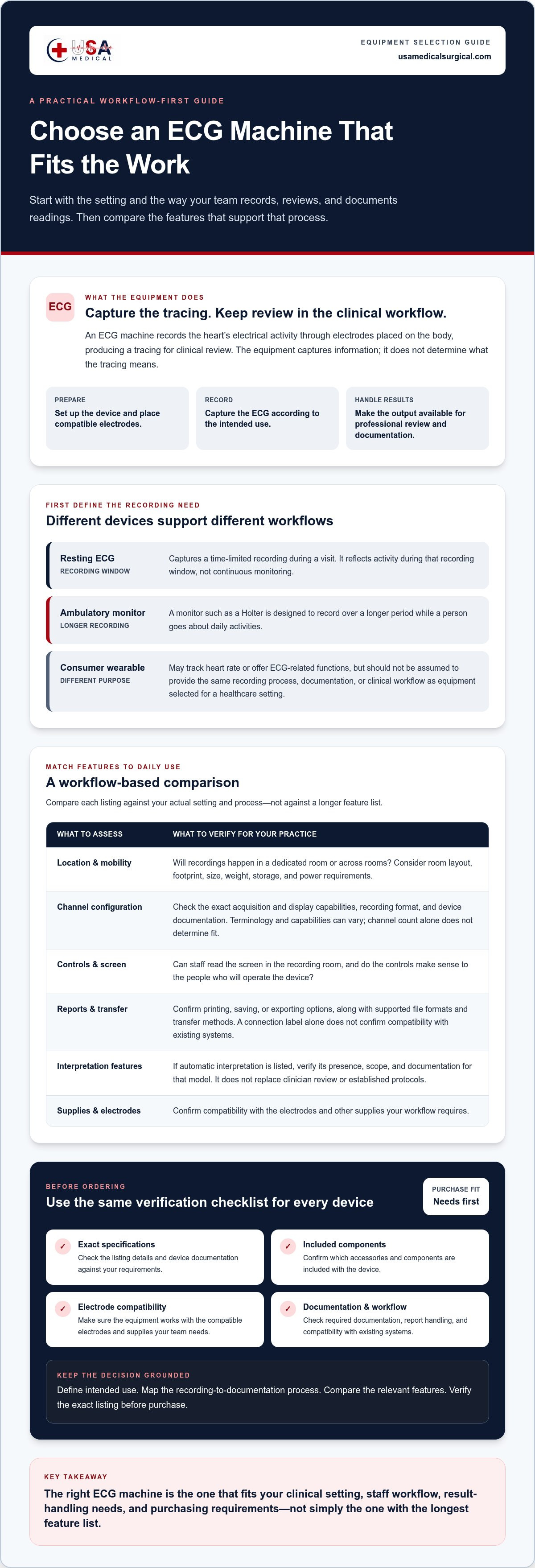
Use this checklist with clinical leadership, IT, and procurement before placing an order. Check the exact device and configuration, since specifications and included components can vary by listing.
- Define intended use. Confirm the recordings and care setting the device must support, and have clinical leadership verify that it fits your protocols.
- Review device specifications. Compare the configuration, recording capabilities, display, power requirements, and dimensions with the manufacturer’s documentation.
- Confirm included components. Identify what comes with the device and what must be ordered separately, such as lead wires, cables, ECG electrodes, or recording paper.
- Verify compatibility. Match electrodes and other required accessories to the exact device documentation. Don’t assume a component will fit just because it is described as an ECG accessory.
- Check regulatory documentation. Have procurement verify the applicable FDA status and supporting documents for the specific model using current device documentation and authoritative records. Don’t generalize a claim across a product category.
- Review the data workflow. Ask IT to confirm connection methods, file handling, and compatibility with the systems your practice intends to use.
- Plan for implementation. Identify staff training needs and confirm which support terms apply to the specific purchase.
- Confirm purchasing details. Check availability, shipping, return terms, and any other purchasing conditions before submitting the order.
Are ECG Electrodes and Other Accessories Included?
Check the listing to see whether electrodes, lead wires, paper, cables, and other components are included or need to be purchased separately. Then compare each item with the device documentation to confirm compatibility. USA Medical and Surgical Supplies offers ECG machines and ECG electrodes, but check the details for the specific listing before ordering. If you need help comparing electrode options, review the available product information alongside the device requirements.
What Documentation and System Checks Should Buyers Complete?
Assign each check to the right stakeholder. Clinical staff can confirm intended use and required accessories. IT can assess connectivity and the planned data workflow. Procurement can verify the exact model, listing details, availability, applicable documentation, and purchasing terms. For regulatory claims, rely on current documents and authoritative records tied to that device, not general product descriptions.
Once your checklist is complete, browse ECG machines and electrodes and compare the available listing details with your team’s requirements.
Where Can You Find ECG Machines and Related Clinical Supplies?
After defining the clinical use, workflow, configuration, and required accessories, compare those needs with the exact product listing. USA Medical and Surgical Supplies is an online medical equipment retailer with ECG machines and ECG electrodes in its catalog. Customers can browse product categories and place orders through the storefront. Use a listing as a starting point, then confirm its details against the manufacturer’s documentation and your organization’s requirements.
How Can You Match a Product Listing to Your Requirements?
Review each potential device against the requirements established by your clinical, IT, and procurement stakeholders. Confirm the listed configuration, which components are included, and whether the electrodes and other accessories you need are compatible. Check that the stated data-transfer options fit your practice’s workflow rather than assuming a connection method will work with your systems.
Keep questions with the right people. Clinical leadership can assess intended use and fit with practice protocols. IT can review connectivity and data handling. Procurement can verify the model, documentation, availability, and purchasing terms. If a listing doesn’t clearly answer a question, seek clarification before treating an assumption as a confirmed specification.
What Should You Confirm Before Placing an Order?
Read the product description and any available manufacturer documentation closely. Check whether the exact model and configuration meet your requirements, which accessories are included, and what must be sourced separately. Confirm compatibility using device-specific documentation. Review applicable regulatory claims against current documentation and authoritative records for that model.
Also check the retailer pages for current shipping, returns, and order details before completing a purchase. These terms may be specific to the listing or order, so don’t rely on assumptions based on another product or a prior purchase. If availability or included components aren’t clear, verify them before ordering.
A well-matched ecg machine fits your clinical workflow and has verified specifications, accessories, and purchasing details. When your team is ready to compare listings, browse ECG machines.
Choose Equipment That Fits Your Clinical Workflow
The right ecg machine supports your intended use and fits the way your team works. It isn’t necessarily the device with the longest feature list. Compare device type, configuration, portability, and data handling with your clinical setting. Before ordering, have the appropriate clinical, IT, and procurement stakeholders verify the exact model’s specifications, included components, accessory compatibility, documentation, and purchasing terms.
USA Medical and Surgical Supplies is an online retailer offering ECG machines and ECG electrodes, with online ordering for customers across the United States. Review current product listings and confirm the details for the specific device you’re considering.
Browse ECG machines and compare available options with your team’s requirements. A clear checklist helps make the purchasing decision more practical and informed.
Frequently Asked Questions
What is an ECG machine used for?
An ECG machine records the heart’s electrical activity as a tracing for clinical review. In a practice, staff may use it to capture a time-limited resting recording as part of a clinician-directed workflow. The device records information but doesn’t replace professional interpretation or clinical protocols. Select equipment based on its intended use, the setting, and how your team will handle recordings and documentation.
What is the difference between a 3-channel and 12-channel ECG machine?
The terms describe device channel configuration, but channel count alone doesn’t fully explain how a device acquires, displays, or records ECG data. Specifications and terminology can vary, so compare the exact product documentation rather than assuming a channel count means a particular workflow or lead arrangement. Ask clinical leadership which recording capabilities are required, then verify that the listed configuration supports them.
How do I choose an ECG machine for a medical practice?
Choose an ecg machine by starting with its intended use and your practice workflow. Consider where recordings happen, who operates the equipment, how reports are handled, and whether the device needs to move between rooms. Then confirm configuration, display and control needs, connectivity, included components, and accessory compatibility. Have clinical, IT, and procurement stakeholders review the exact model’s documentation and purchasing details before ordering.
Can an ECG machine connect to an electronic health record system?
Some devices may offer data-transfer or connectivity options, but compatibility with a specific electronic health record system depends on the device and your practice setup. Check the exact model’s documentation for supported connection methods, output formats, and any stated system requirements. Ask your systems administrator to confirm whether the device fits your intended workflow. Don’t assume that wireless, network, or export features guarantee EHR integration.
Are ECG electrodes included with an ECG machine?
Not necessarily. Included components vary by product listing, so check whether electrodes, lead wires, cables, recording paper, or other accessories are supplied or need to be purchased separately. Confirm compatibility with the exact device using its documentation before ordering. USA Medical and Surgical Supplies offers ECG machines and ECG electrodes, but verify the included items and accessory requirements for the specific listing you’re considering.
Is an ECG machine the same as a Holter monitor?
No. A resting ECG machine captures a time-limited recording during a clinical visit, while a Holter monitor is an ambulatory device used for extended recording. They support different workflows and aren’t interchangeable categories. Confirm the intended use with clinical leadership and check the manufacturer’s documentation before purchasing. If your practice needs ambulatory monitoring, verify that the specific device is designed and documented for that purpose.